

The multilateral ADR agreement M362 allows, by way of deviation from section 4.1 of the ADR, the transport of vessels approved in accordance with the EN 17339 standard designated for UN 1049 Compressed Hydrogen, temporarily filled with UN 1066 Compressed Nitrogen (for installation, inspection, maintenance, or disposal), at a pressure...
11th Security Conference – knowledge, experience, cooperation
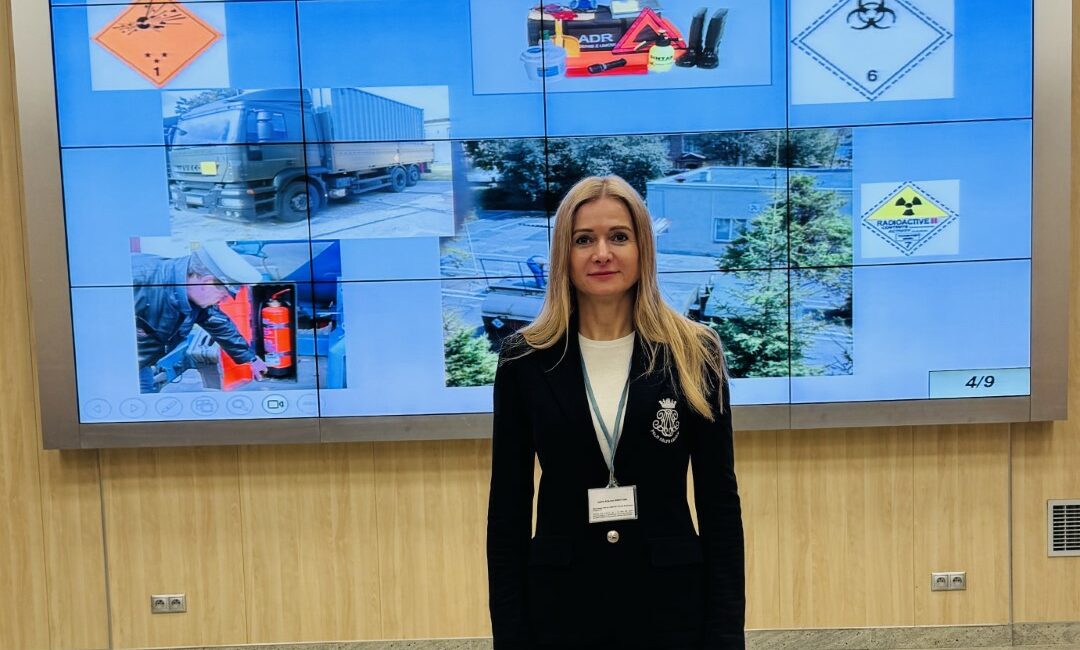
The 11th edition of the Security Conference in the Armed Forces of the Republic of Poland is behind us—an event dedicated to key challenges related to security in today’s rapidly changing world. The conference program included, among others: current threats to the security of the state and its citizens, the...
Analysis of the ADR training system in Poland

Activities related to conducting ADR, RID and ADN courses are regulated by polish law. Training centers conducting such courses must be entered in the register of entities conducting courses in the transport of dangerous goods.
SHOULD CLEANING CLEANING CONTAMINATED WITH HAZARDOUS SUBSTANCES BE CLASSIFIED UNDER ADR?

RAG ISSUEMaria NicopulosJanuary 22, 2024 IntroductionRags, i.e. cleaning cloths contaminated with hazardous substances are produced almost in every works, workshop or factory as a result of cleaning or degreasing surfaces with solvents, removers or oily substances. Hazardous waste is generated, depending on the applied chemical agent. This hazardous waste should be...
Transport of dangerous goods in the Polish Armed Forces

For the fourth time, the Movement and Transportation Division – National Movement Co-ordination Centre invited me to a conference on the Dangerous Goods Transport Safety in the Polish Armed Forces. The meeting took place in Pisz on 19-21 September 2023 and the main topic of the 9th Conference was the...
Publication of my first book entitled “MANAGING THE SAFETY OF THE ROAD TRANSPORT OF HIGH CONSEQUENCE DANGEROUS GOODS IN POLAND”.

Hazardous materials are transported every day in our environment. These materials are used in every field of the economy, mainly in the chemical industry, but also in agriculture, mining, transport and construction. We also commonly use them in everyday life. The groups of hazardous materials include cosmetics, perfumes, various types...
Principles of medical waste transport – theory and practice

At the beginning of 2023, the issue of medical waste transport in Poland began to arouse great controversy, especially among employees of health care facilities. This is related, among others, to the end of the 4-year transition period on 31.12.2022 for the implementation of the requirements of 1.8.3.1 of the...
Amendments to ADR 2023

On 1 January 2023, another amendment to the provisions of the Agreement concerning the International Carriage of Dangerous Goods by Road (ADR) entered into force. As in the case of the previous amendments, a six-month transition period was introduced. This means that until 30 June 2023 either the ADR provisions...
IASA Association annual meeting in Istanbul

For the first time in 3 years, the meeting of IASA Association (International Association of National Associations of Dangerous Goods Safety Advisers by Road) was held in a traditional, stationary way – this time in Istanbul, Turkey. The meeting was organised by the Turkish association of advisers – TMGDK-DER and...
Role and tasks of the adviser

At the invitation of the Transport Technical Supervision, the organiser of the scientific and technical conference “Carriage of dangerous goods”, which was held on 29+30.10.2022, in Warsaw I delivered a paper on the “Role and tasks of the adviser on the safety of the transport of dangerous goods by road”.Na...